

Rats Caught on Camera Hunting Bats in Mid-Air for the First Time

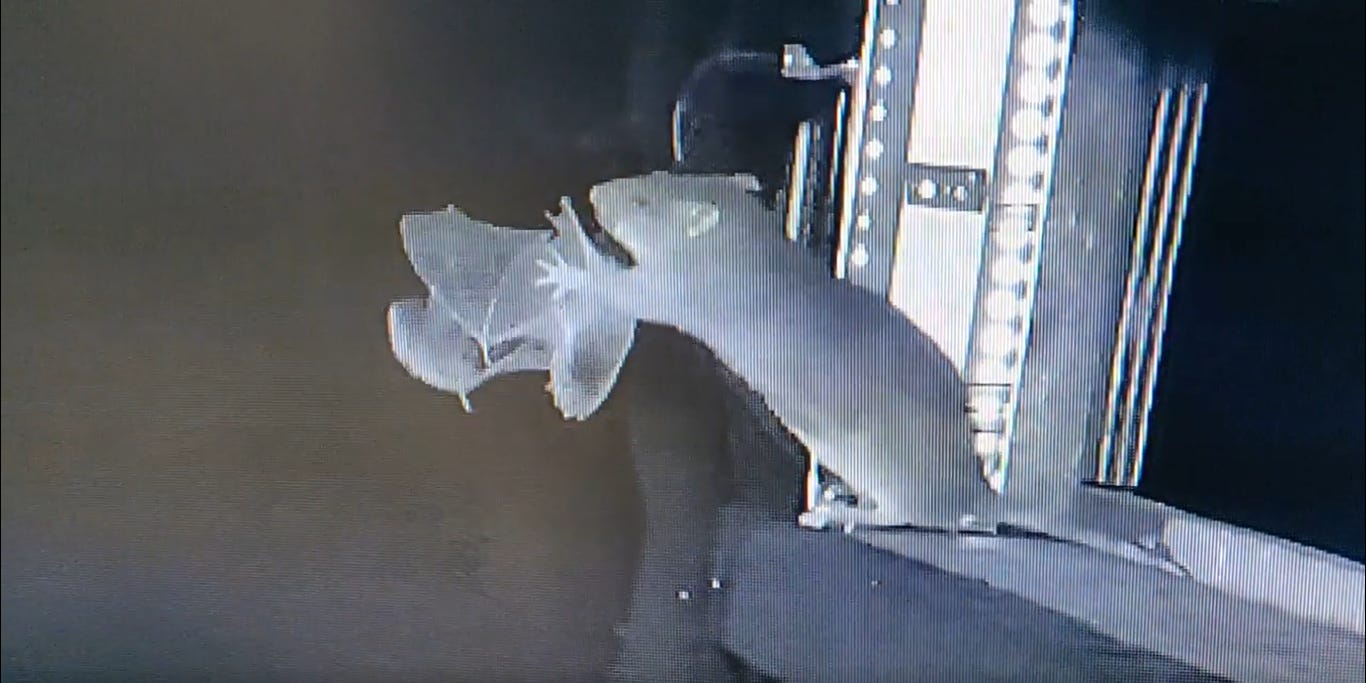
In northern Germany, researchers have filmed brown rats (Rattus norvegicus) leaping from cave ledges to catch bats mid-air — the first evidence that rodents can intercept flying mammals. The finding, published in Global Ecology and Conservation, turns one of ecology’s most familiar scavengers into an unexpectedly skilled predator.
The behaviour was documented at Segeberg Kalkberg, a limestone cave that shelters around 30,000 hibernating bats each winter. Over five weeks in autumn 2020, and through follow-up monitoring between 2021 and 2024, a team led by Florian Gloza-Rausch used infrared and thermal cameras to record something few biologists would have believed without footage: a rat standing on its hind legs at the cave entrance, sensing wingbeats in the dark, then springing up to snatch a bat from the air.
Across those weeks, the team confirmed 13 kills and found a hidden cache of 52 bat carcasses — clear proof that the rats weren’t scavenging but hunting deliberately. At that rate, a small colony could remove roughly 7% of the site’s bat population in one season.
That’s extraordinary for an animal not built for chase or flight. Brown rats are omnivores, known for raiding bins or foraging for leftovers, not precision hunting. Yet here, they’ve developed two distinct strategies: aerial interception at the cave mouth and ground attacks on bats crawling to roost.
How they locate their targets in near-total darkness isn’t fully known. The researchers suspect they rely less on vision and more on tactile whisker cues and acute hearing — an intuitive sensory toolkit tuned for movement and sound.
The study calls this an example of behavioural plasticity: the capacity of animals to adapt and learn new tactics when the environment rewards them. The narrow cave geometry, dense streams of bats, and stillness of the night likely formed the perfect setup — an ambush zone where persistence turned into strategy.
It’s also a worrying sign for conservationists. Brown rats, an invasive species across much of Europe, could pose a serious threat if they begin exploiting large bat roosts. The researchers suggest monitoring and managing rat presence around key hibernation sites as a precautionary step.
Still, what stays with you is the image itself — a rat poised in the shadows, not rummaging but waiting, listening, calculating. A city dweller turned cave predator.
It’s a quiet reminder that evolution and adaptation don’t only happen in remote wildernesses or across millennia. Sometimes, they unfold under our own streetlights — in ways we simply never thought to look for.
Read more: ScienceClock